In the fast-paced world of automotive sales, speed is everything. Whether you are managing a high-volume new car dealership or a local boutique for used car dealerships near me, your ability to follow up determines your bottom line.
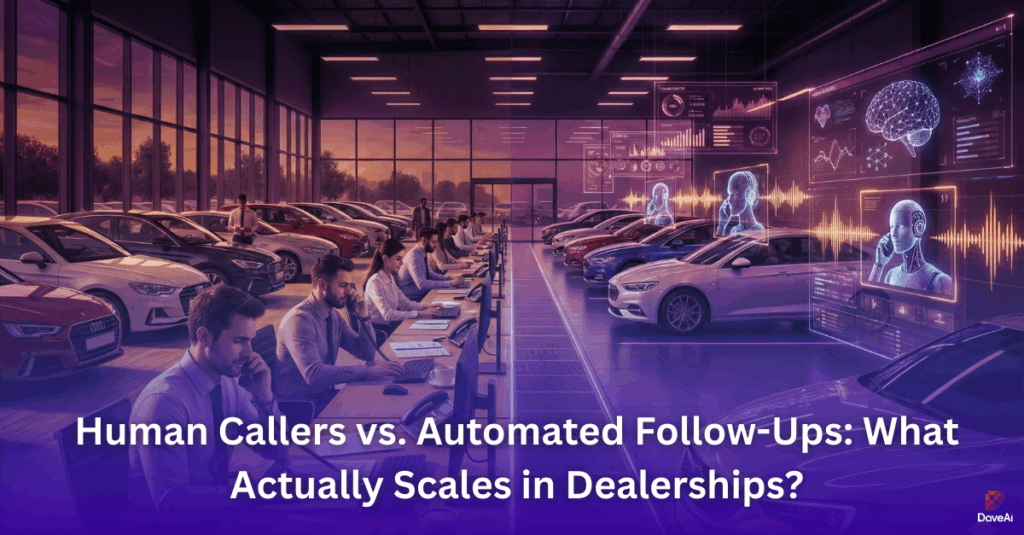
But as lead volumes grow, a classic debate emerges: Should you stick with a traditional team of human callers, or is it time to shift toward AI for automotive customer service?
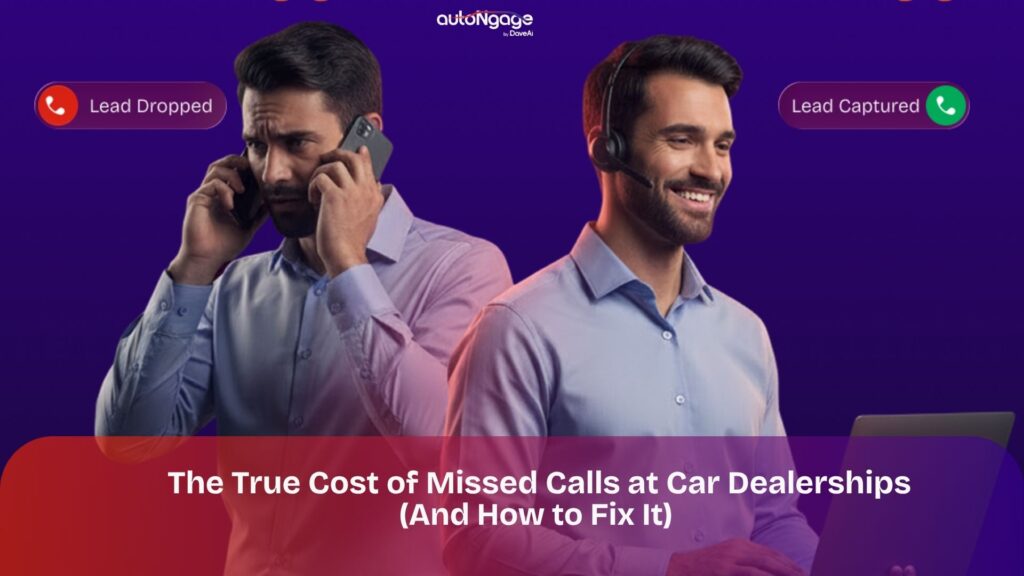
Traditionally, human callers have been the backbone of the BDR (Business Development Representative) team. However, humans have limits they have limited bandwidth, they get discouraged by “no-answers,” and they can only make one call at a time. This is where AI calling tools for automated follow-ups are changing the game, offering a way to scale that was previously impossible.
Understanding AI Calling Tools for Automated Follow-Ups
AI calling tools are not the “robot calls” of the past. These are sophisticated AI phone systems powered by natural language processing. Unlike a simple recording, a virtual call assistant can understand intent, answer questions about inventory, and even handle objections in real-time.
Integrating these tools directly into your omnichannel AI strategy ensures that the second a lead comes in from your website or a third-party listing, a call is triggered. This ensures you are always the first to reach the customer, which is vital since response rates drop by 10x if you wait longer than five minutes.
Driving Efficiency with AutoNgage
Modern showrooms require a 24/7 engagement strategy that doesn’t overwhelm the staff. AutoNgage is designed specifically to fill this gap, acting as a virtual BDC team that handles the heavy lifting of multi-channel outreach.
Trusted by 4,000+ dealerships and 6 Global OEMs, AutoNgage can converse fluently in 11+ languages. It seamlessly manages everything from WhatsApp and text to automated voice calls. By ensuring every lead is engaged instantly and professionally, dealerships typically see an 18% average ROI and a significant boost in qualified leads.
Curious about how much impact this could have on your bottom line? Check out our AutoNgage ROI Calculator to see the potential growth for your specific dealership.
The Benefits of Using AI Calling Tools in Your Follow-Up Strategy
Switching to AI BDR tools for automated follow-ups offers several transformative benefits:
- Improve Customer Engagement: AI never gets tired. It follows up with every lead, every time, ensuring no prospect feels ignored.
- Increase Response Rates: By calling at the optimal time and following up persistently but politely, AI significantly boosts the number of “hot” leads that actually talk to your sales team.
- Reduce Manual Workload: Your human staff can stop spending 80% of their day dialing numbers and focus on closing deals. This is one of the 7 AI innovations revolutionizing dealerships this year.
- Boost Sales Productivity: Automation ensures your CRM is always updated, allowing your team to walk into the showroom with a clear list of confirmed appointments.
Key Features to Look for in AI-Powered Calling Solutions
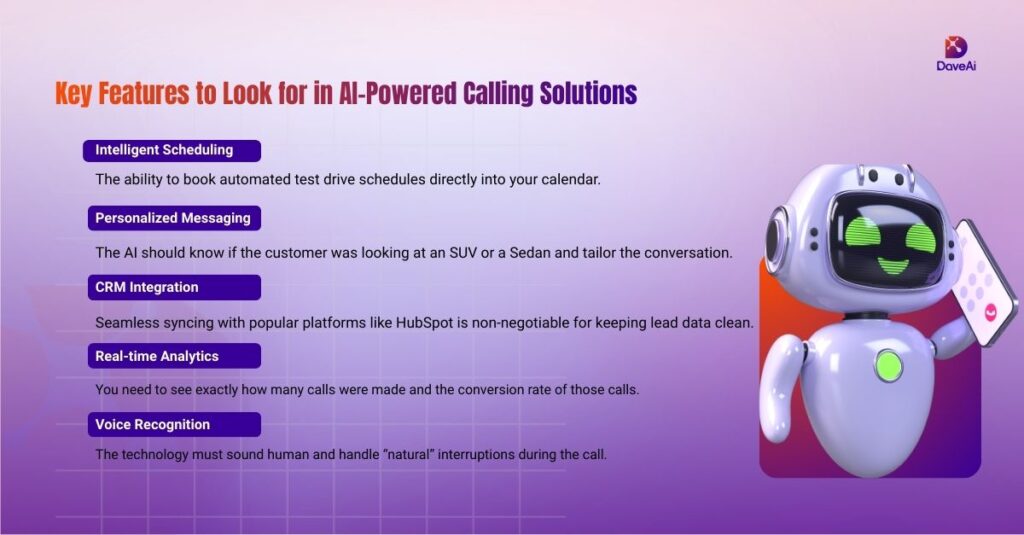
If you’re looking for the best AI calling software 2026 and beyond, ensure it includes these “must-have” features:
- Intelligent Scheduling: The ability to book automated test drive schedules directly into your calendar.
- Personalized Messaging: The AI should know if the customer was looking at an SUV or a Sedan and tailor the conversation accordingly.
- CRM Integration: Seamless syncing with popular platforms like HubSpot is non-negotiable for keeping lead data clean.
- Real-time Analytics: You need to see exactly how many calls were made and the conversion rate of those calls.
- Voice Recognition: The technology must sound human and handle “natural” interruptions during the call.
Top Use Cases: How Businesses Leverage Automated Call Follow-Ups
How does this look in practice? Dealerships are finding that AI agents for automotive can handle the entire top-of-funnel journey:
- Lead Nurturing Automation: Following up with “cold” leads from six months ago to see if they are back in the market.
- Appointment Reminders: Sending automated calls to confirm a test drive, reducing “no-show” rates by up to 30%.
- Service Drive Upsells: AI can identify customers with high repair costs or expiring warranties and offer them a trade-in appraisal call automatically.
- Customer Feedback: Automatically calling after a sale to gauge satisfaction and ask for a Google review, which is critical for improving customer satisfaction.
Troubleshooting & Best Practices: Staying Compliant in the US Market
While automated technology is incredibly powerful for scaling your dealership’s outreach, it must be used responsibly. In the US market, failing to follow telecommunications regulations doesn’t just harm your brand reputation it can lead to massive legal fines and carrier blacklists that halt your operations completely.
Here are the key compliance standards you need to follow:
- TCPA Compliance is Non-Negotiable: The Telephone Consumer Protection Act (TCPA) strictly governs automated calls and texts. You must obtain express written consent from a consumer before sending automated marketing messages or using an auto-dialer. Recent FCC rulings have also closed the “lead generator loophole,” meaning you need one-to-one consent. Blanket consent from third-party lead lists is no longer valid, and violations can cost your business $500 to $1,500 per call or text.
- A2P 10DLC Registration for SMS: If you are texting US customers from a standard 10-digit long code (a regular local phone number), you are required to register your business and your specific messaging campaign with The Campaign Registry (TCR). Mobile carriers like AT&T, T-Mobile, and Verizon will actively block unregistered business texts.
- Honor the Opt-Out (CTIA Guidelines): Always include clear sender identification and an easy way out in your initial texts (e.g., “Reply STOP to opt out”). If a user opts out, your automated system must process and respect that request immediately.
- Script Optimization: Use AI writing assistants to keep your scripts natural, friendly, and helpful. Note that carriers now use AI to monitor text traffic; if your live messages drift too far from the templates you registered for 10DLC, they may be flagged and filtered as spam.
- Monitor Metrics: Regularly check your “call-to-appointment” ratio. If it’s unusually low, you may need a better lead management solution or need to evaluate if your calls are being flagged as “Scam Likely” by carriers.
Does WhatsApp Work for the US Market?
The short answer: Yes, but it should not replace SMS as your primary outreach tool.
The reality: In many parts of the world, WhatsApp is the default messaging app. In the US, however, native SMS and Apple’s iMessage still completely dominate the B2C communication landscape.
That said, WhatsApp is growing rapidly in the US, particularly among Gen Z, international travelers, and diverse demographic communities.
The Best Practice: Do not use WhatsApp for cold outbound lead generation in the US. The adoption rate isn’t high enough to justify it as a primary channel, and Meta’s own commerce policies strictly prohibit spammy outreach. Instead, offer WhatsApp as an optional, inbound channel for customer support, post-sale engagement, or high-touch conversational commerce. Rely on fully compliant SMS and Voice for your automated outbound marketing.
Frequently Asked Questions (FAQ’s)
Dealerships earn revenue through vehicle markups, but the highest margins often come from “Fixed Ops” service repairs and parts sales. They also make significant profit through F&I (Finance and Insurance) products and commissions on brokered car loans.
New cars rarely go “unsold” forever. If they sit for over 90 days, dealers typically offer massive discounts, convert them into “service loaner” vehicles, trade them with other dealerships, or as a last resort, sell them at a dealer-only auction.
Yes! AI analyzes vehicle mileage and service history to send predictive maintenance reminders. This proactive outreach keeps your service bays full and prevents customers from drifting to independent repair shops.
While humans are great for closing, research shows many customers prefer the speed of AI for simple tasks like booking a service appointment or checking if a specific car is still in stock. It removes the friction of being put on hold.
Conclusion: Revolutionize Your Follow-Up Process
In the battle of Human Callers vs. Automated Follow-Ups, the winner isn’t one or the other it’s the “Hybrid” model. By using AutoNgage to handle the heavy lifting of initial outreach, you empower your human team to do what they do best: build relationships and close deals.
Ready to scale your dealership’s outreach? Explore AutoNgage and start converting more leads today.
<